

Land & Lot Financing
Vacant Land Loans
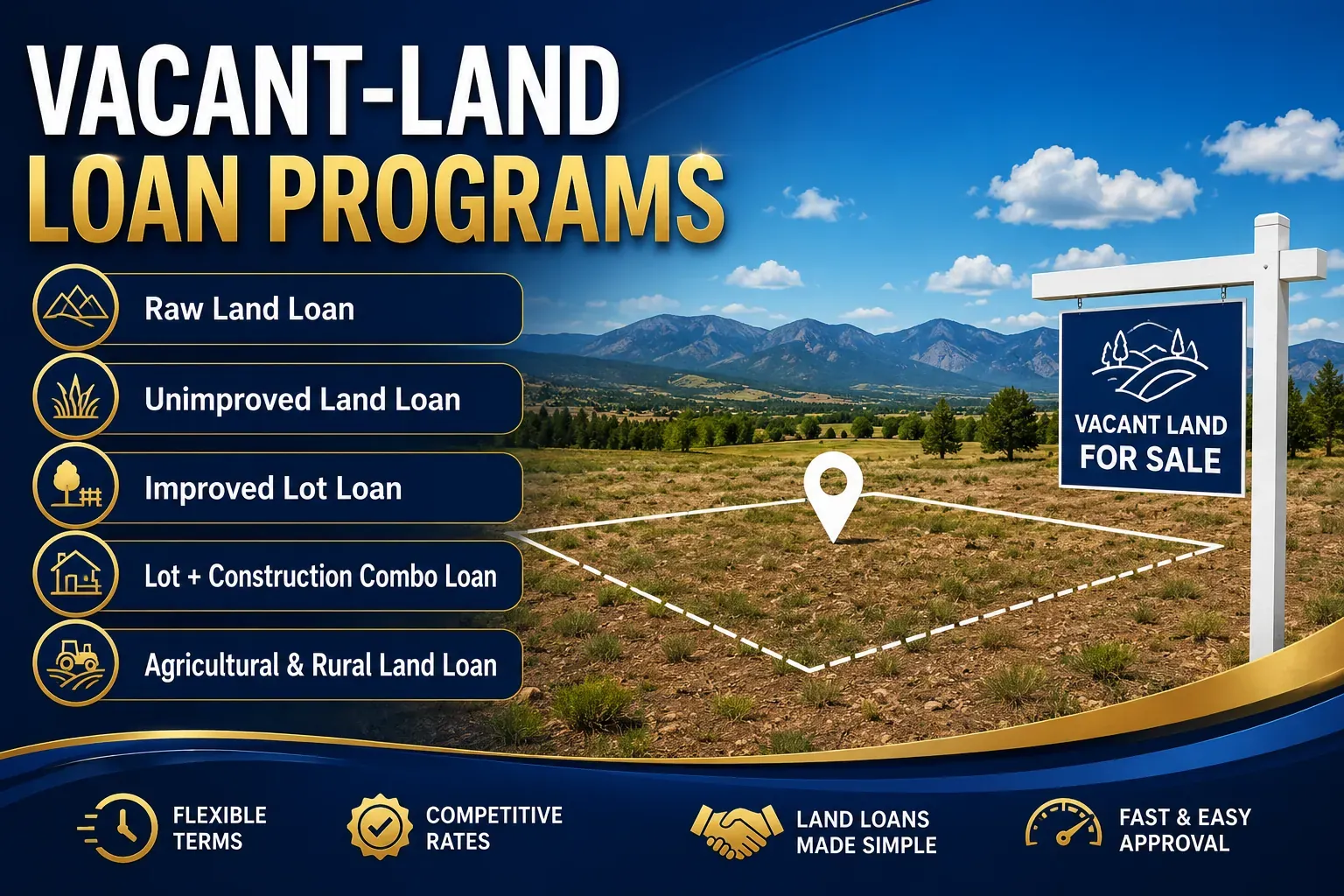
5 LAND LOAN PROGRAMS. ALL UNDER ONE ROOF.
ONE DIRECT MORTGAGE LENDER.
LAND TODAY. POSSIBILITIES TOMORROW.
Explore financing for vacant parcels, residential building lots, rural acreage and land with home construction. Compare the five programs and learn what to prepare before speaking with a licensed loan officer.
1st Florida Lending Corp. · Orlando-based Direct Mortgage LenderSame-Day Land Loan Quotes
- 5 Land ProgramsRaw · Lots · Build · Rural acreage
- As Low as 5% DownLand + Construction, one loan
- Tax Return Income OnlyW-2 / tax returns to qualify
- 640–680 Credit Generally700+ preferred
Which Land Are You Buying?

Raw Land | 35% Down
Untouched land — trees or brush, no road, no power, no water.
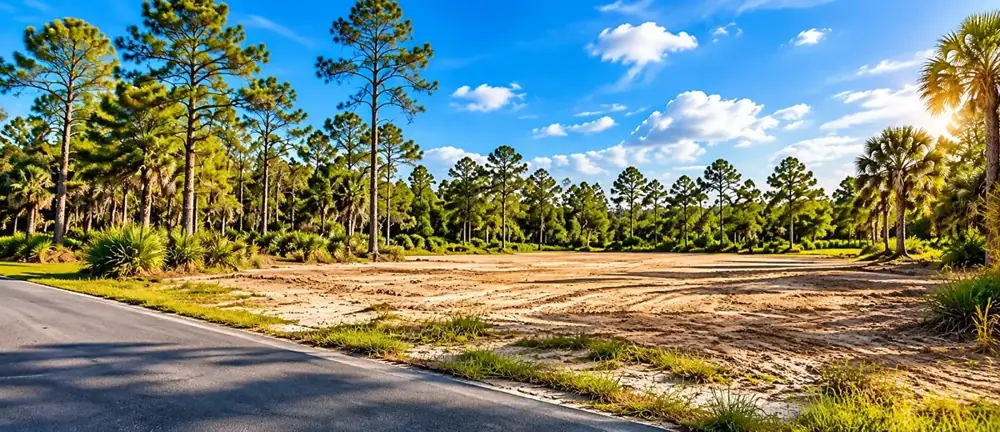
Unimproved Land | Contact Us
Partly prepared — road access or a cleared lot, but utilities not connected.
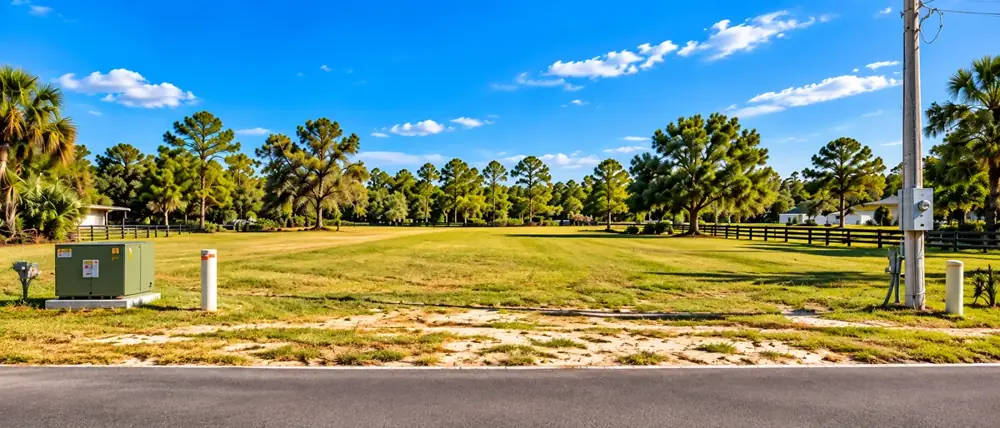
Improved Land | Contact Us
Ready to build — paved road, power, water/sewer already at the lot.
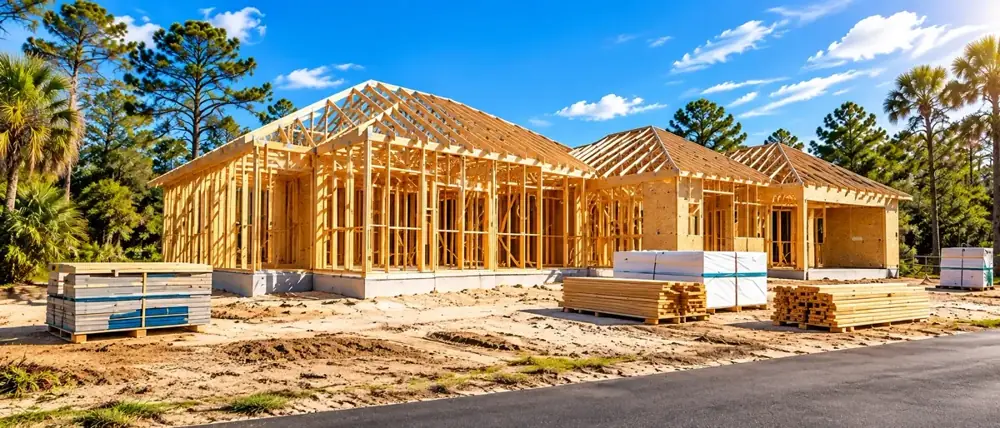
Land + Construction | 5%+ Down
Buy the lot and build the home — one loan from land to move-in.
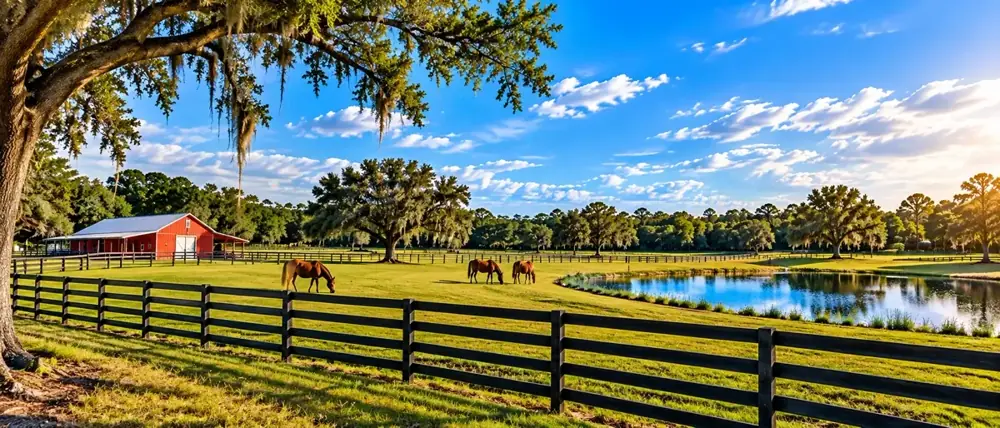
Agricultural & Rural | 20%–45% Down
Larger acreage — farms, ranches, timber tracts and equestrian property.
Important: Tax Return Income Only. All 5 vacant land programs require W-2 / tax return income only to qualify. We do not accept self-employed income, P&L, asset-based or any other Non-QM type of income for land loans.
Unimproved Land Loan and Improved Land Loan down payments vary. Check with your loan officer for current terms before making a financing-dependent offer.
What Is a Vacant Land Loan?
A vacant land loan finances property without a completed home. Unlike a traditional home mortgage, the lender must evaluate the land itself, including its access, utilities, potential use and marketability. A parcel that looks attractive may still require substantial preparation before construction can begin.
Buying land can help you secure a future home site, acquire rural acreage or plan a custom build. If you already own land, ask whether refinancing or using land equity is appropriate. Purchase and cash-out refinance are specifically identified for Raw Land Loan and Unimproved Land Loan in the program requirements; other refinance options must be confirmed.
Compare All 5 Programs Side by Side
Choose the description that best matches your parcel. This comparison does not determine eligibility or program availability.
Swipe sideways to see all columns →
| Program | Down | Road | Power | Water / sewer | Permits |
|---|---|---|---|---|---|
| Raw Land Loan | 35% Down | No | No | No | No |
| Unimproved Land Loan | Contact us | Yes | No | No | No |
| Improved Land Loan | Contact us | Yes | Yes | Yes | Varies |
| Land + Construction | 5% + Down | Yes | Yes | Yes | Yes |
| Agricultural & Rural Land Loan | 20% – 45% Down | Varies | Varies | Varies | Varies |
All five programs
Minimum credit score generally 640–680; tax return income only. Rule of thumb: the more finished the land, the smaller the down payment. Actual terms depend on the program and property.
Vacant Land Loan Calculator
Estimate financing using your own assumptions. For Land + Construction, enter the combined land and construction cost, not just the lot price. The calculator models a fully amortizing loan, not construction draws, interest-only payments or balloon terms.
Estimate your land financing
Vacant land loan calculator
- Down payment
- $105,000
- Loan amount
- $195,000
- Loan-to-value (LTV)
- 65%
- Monthly principal and interest
- $1,631.06
- Total interest
- $196,454
- Estimated cash required
- $111,000
Unimproved and Improved Land require confirmation, so no down payment is assumed for them. Estimates exclude taxes, insurance, reserves, prepaid items, land equity credits and other charges unless entered in closing costs. Results are educational only, not a rate quote, approval or commitment to lend.
Explore the Five
Land Loan Programs
01. Raw Land Loan
Untouched land — trees or brush, no road, no power, no water. Highest-risk land type, so it has the highest down payment. Check legal access, potential utility extensions and whether the intended use is permitted before committing to a purchase.
03. Improved Land Loan
Ready to build — paved road, power, water/sewer already at the lot. Common in subdivisions and planned communities, and the easiest land type to appraise and finance. Confirm that utilities can serve the proposed home and that permits and setbacks allow your plans.
05. Agricultural & Rural Land Loan
Larger acreage — farms, ranches, timber tracts and equestrian property. Each property is unique; terms depend on acreage, use and location. Discuss the intended use, access, acreage and any existing improvements with a loan officer.
02. Unimproved Land Loan
Partly prepared — road access or a cleared lot, but utilities not connected. Final terms depend on location, zoning, utilities and appraisal. A cleared parcel is not necessarily buildable; obtain estimates for utility connections and confirm access rights.
04. Land + Construction
Buy the lot and build the home — one loan from land to move-in. Land you already own may count toward your down payment. Manufactured homes are not eligible. Prepare a builder proposal, plans and construction budget.
Understanding Down Payments and Credit
A down payment reduces the amount financed. For example, a $250,000 Raw Land Loan purchase at 35% down requires $87,500 down before closing costs, leaving $162,500 to finance. At 20%–45% down, the same purchase price would require $50,000–$112,500 under the Agricultural & Rural Land Loan, subject to qualification.
Minimum credit scores generally range between 640–680, with 700+ preferred to unlock better interest rates and terms. Scores in the low 600s (down to 620) may require compensating factors. Some programs are not available. A credit score alone does not establish eligibility.
Prepare W-2 and tax return income documentation for review. Do not assume that business income, bank deposits or assets can substitute for the stated income requirements.
Land Loans vs. Home and Construction Loans
Choose based on your actual plans rather than the lowest advertised down payment. If construction is not ready to begin, a standalone land loan may be more appropriate. If you have a builder and plans, ask about Land + Construction. Traditional home financing is generally designed around a completed dwelling.
Swipe sideways to see all columns →
| Feature | Vacant land | Traditional home | Land + Construction |
|---|---|---|---|
| Collateral | Land parcel | Completed home | Land and planned home |
| Key review | Access, utilities, use | Home condition and value | Plans, builder, budget |
| Timing | Build later or hold | Move into completed home | Build now |
| Down payment | Program specific | Varies by program | As low as 5% |
Land Appraisals, Zoning and Utilities
A land appraisal considers the parcel and relevant comparable sales. Size, location, access, utility availability, restrictions and potential use may affect value. The purchase price is not necessarily the appraised value. Ask how a difference could affect your required cash.
Before purchasing, confirm legal road access, zoning and permitted uses with the relevant local authority. Review surveys, easements, deed restrictions, flood exposure, wetlands and utility availability. If public water or sewer is unavailable, investigate well and septic feasibility. A lender appraisal does not replace independent legal, environmental or engineering due diligence.
Even improved land may need permits, impact fees or site work. Obtain written estimates and allow time for approvals before setting a construction budget.
Documents to Prepare
Your loan officer will confirm the actual documentation required.
Gather before you talk with a loan officer
- Parcel address or listing and purchase contract if available
- Parcel identification number, survey or legal description
- Information about access and utilities, and your intended use
- W-2 and tax returns
- Evidence of funds for the down payment and closing costs
- For construction: plans, builder information and a proposed budget
Common mistakes to avoid
- Assuming a cleared lot is buildable or that a nearby utility is connected
- Assuming an advertised minimum down payment applies to every parcel
- Relying on an unverified program or overlooking access easements
- Combining several parcels into one financing plan — we cannot consolidate multiple properties into one note
- Forgetting to budget for site preparation separately from the purchase price
What Our Clients Say on Google*
“When every other lender said it was impossible to get us a home loan with just 1 year of bank statements from my self employment, Carlos and his team said with full confidence they can get me a loan and they did!”
God Hears Clothing
August 2026 · Review excerpt
“This was one of the most difficult deals I’ve had as a new home sale agent, and after multiple lenders were unable to get the buyer qualified, Carlos stepped in and made it happen. His communication, persistence, and problem-solving were outstanding throughout the entire process. Thanks to his hard work, we were able to successfully close today.”
Paul K.
March 2026 · Review excerpt
“Being self employed, as you probably know, doesn’t make it easy to secure a mortgage. Carlos made it happen. He was very professional and personable. I would highly recommend. Thank you Carlos!”
Kevin B.
April 2026 · Review excerpt
* Just a few of our hundreds of Google reviews.
See more Google reviewsSeven Steps to Land Financing
Identify the parcel and your intended use. Decide whether you intend to hold, build or use the land for rural activities.
Compare programs and confirm availability with a licensed loan officer.
Review income, credit and available funds; request guidance on the appropriate financing path.
Gather property documents and verify access, zoning and utilities.
Submit the application and requested documentation for review.
Complete appraisal, underwriting and any outstanding conditions. Review final terms and closing costs.
Sign closing documents and complete funding once all conditions are satisfied. For construction, follow the agreed construction funding process.
Speak with Loan Officer - Get Pre-Approved
Send us the parcel address or listing — a licensed loan officer will tell you which of the 5 programs applies.
Why Choose 1st Florida Lending?
All 5 Programs Under One Roof
Compare Raw Land, Unimproved Land, Improved Land, Land + Construction and Agricultural & Rural Land with one lender. Your loan officer can help you identify the program that fits your parcel and confirm current terms.
Direct Mortgage Lender
Work with a direct mortgage lender that emphasizes education and personal guidance.
Start With Your Parcel
Share the parcel listing and your intended use to begin a conversation with a licensed loan officer.
Know Before You Commit
Understand which program may fit, what information is needed and which financing requirements apply before you move forward.
Frequently Asked Questions
Raw land has nothing — no road, no power, no water. Unimproved land has some work done, like road access or clearing, but utilities are not connected yet.
Not Sure Which Land Loan Fits?
- Parcel Address or Listing
- Intended Use
- W-2 / Tax Return Income
- Down Payment Funds
All land loans are subject to credit approval and property qualification. Down payment amounts, requirements, terms, and other conditions vary by program, property, and borrower profile and all may be changed at any time without notice. Program 2 (Unimproved Land Loan) and Program 3 (Improved Land Loan) are available, but their down payment requirements vary. Please check with your loan officer for current terms. This is not a commitment to lend. Calculator results are educational estimates only, not a rate quote, preapproval or financing offer.