Live Rates
30-Yr Fixed6.627%APR 6.875%15-Yr Fixed5.840%APR 6.027%FHA 30-Yr6.125%APR 6.375%VA 30-Yr5.990%APR 6.210%Jumbo 30-Yr6.750%APR 6.910%
1st Florida Lending — When Banks Say No! We Say Yes!
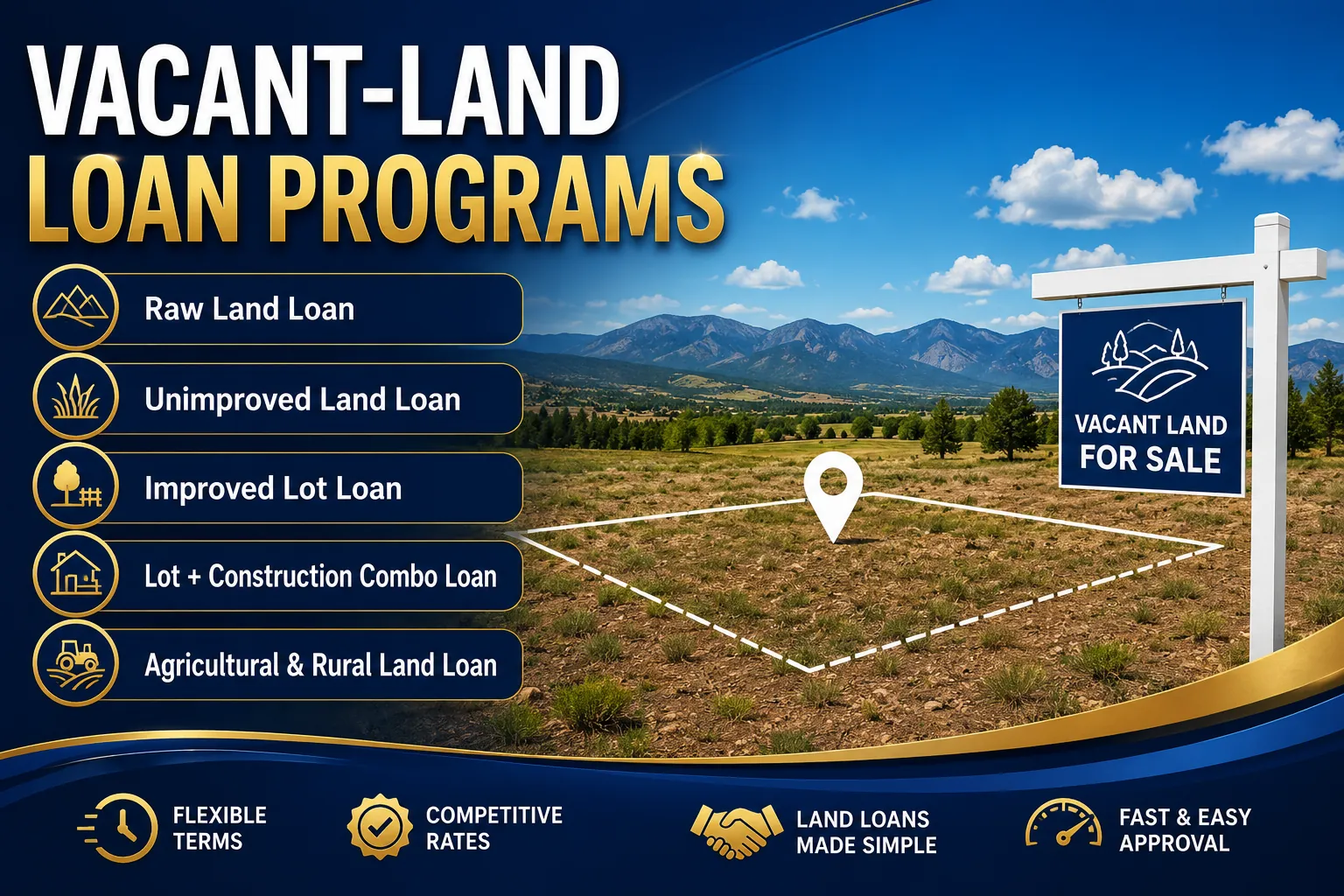
Vacant land parcel for sale in Florida with mountains and a For Sale sign
Land & Lot Financing

Vacant Land Loan Programs

Buying land is the first step toward building your dream home, securing acreage for the future, or holding an investment property. Because vacant land carries more risk for a lender than a finished house, land loans work differently than a standard mortgage — down payments are larger, terms can be shorter, and the amount you'll need to put down depends heavily on how developed the parcel already is.

At 1st Florida Lending Corp, we specialize in scenarios traditional banks turn away. We offer a full range of vacant land financing — from undeveloped raw land through shovel-ready improved lots, plus refinancing for land you already own and construction-to-permanent programs that roll your lot and your build into a single loan.

Land & Lot Financing for Florida Buyers and Builders

Know What You're Looking For?

Quick Search

Skip the scroll — jump straight to the vacant-land program you want to review.

01.

Raw Land Loan

Typically 35% Down

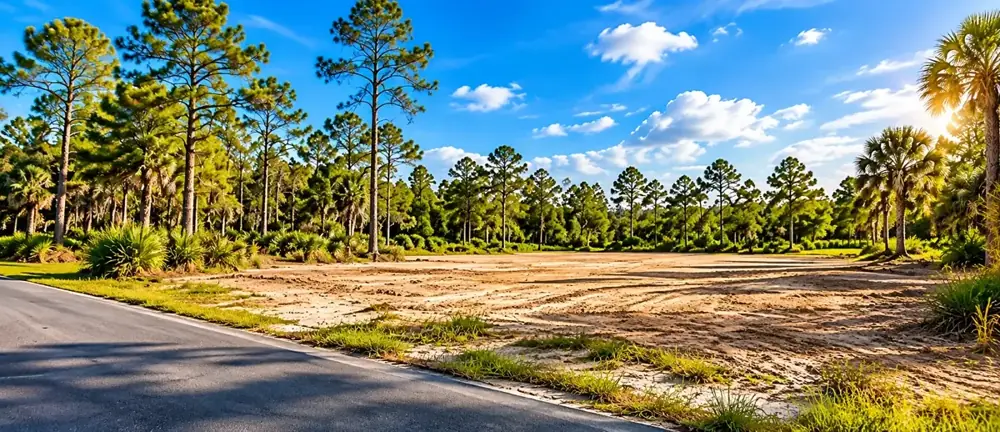
Financing for fully undeveloped property with no structures, utilities, road access, or site improvements. Raw land loans are designed for buyers who want to secure acreage now for future development, custom home construction, recreational use, agricultural planning, or long-term investment.

Because raw land has no completed improvements and may not generate income, lenders generally view it as higher-risk collateral than a finished home, improved lot, or construction-ready parcel. For that reason, programs commonly require a larger down payment, often around 35% depending on the property, borrower strength, location, intended use, and lender guidelines.

Common review items may include a land appraisal, survey, legal description, zoning confirmation, access verification, flood-zone review, environmental considerations, title work, tax information, and a clear explanation of the buyer's plan for the property.

Best fit: Borrowers with strong credit, stable income or verified liquidity, sufficient down payment funds, adequate reserves, and a realistic plan for holding, improving, or developing the land. Especially useful for buyers who want to lock in a desirable parcel before utilities, roads, permits, or construction plans are finalized.

Compared with improved land or construction financing, Raw Land Loan approval is more dependent on borrower strength, collateral quality, access, marketability, fair appraisal, and the long-term use plan.

02.

Unimproved Land Loan

Typically 25% Down

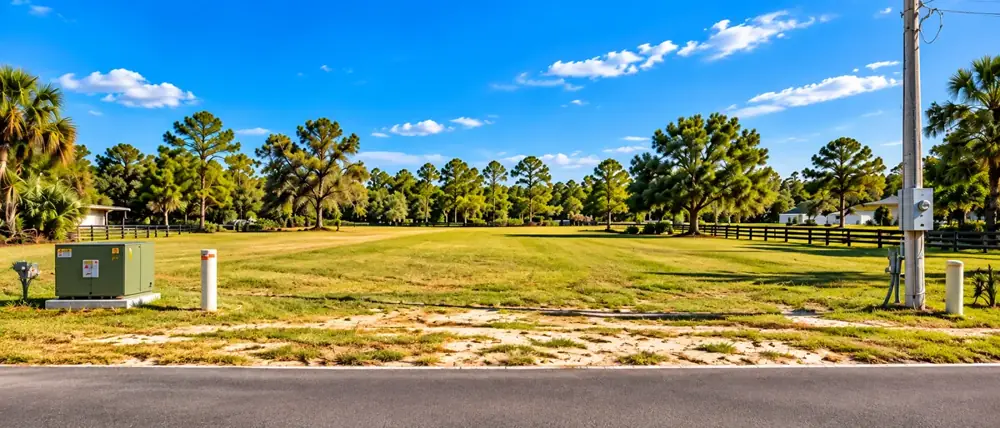
Financing for parcels that have some basic infrastructure in place, such as road access, a cleared homesite, nearby utilities, partial grading, or improved access, but are not yet fully build-ready. Often used by buyers who want to secure a future homesite before final utility connections, permits, septic, well, or construction plans are completed.

Because the property has more utility or access potential than raw land but still requires additional work before construction, lenders usually view it as moderate-risk collateral. A typical structure may require around 25% down, though the final requirement depends on borrower strength, location, access, utilities, zoning, and appraisal support.

Common review items may include a land appraisal, survey, legal description, title work, zoning confirmation, road or easement access, flood-zone review, utility availability, soil or perc information when applicable, and a clear explanation of how the buyer plans to improve or eventually build on the property.

Best fit: Borrowers with strong credit, stable income or verified liquidity, enough cash for the required down payment and reserves, and a practical plan for taking the parcel from partially improved to buildable — especially when a buyer has identified the right lot but still needs time to finalize utilities, site work, permits, or construction financing.

Compared with raw land, this offers a more approachable path because some infrastructure is already present. Compared with improved-lot financing, it still requires more due diligence and borrower strength because the property is not fully construction-ready.

03.

Improved Lot Loan

Typically 15% Down

Financing for shovel-ready residential lots where major site infrastructure is already available — road access, water, sewer or approved septic, and electric service at or near the property. Commonly used by buyers who want to secure a buildable homesite now and begin construction later, or who are finalizing plans before moving into a construction loan.

Because the lot is closer to construction-ready and typically easier to evaluate, lenders generally view it as lower risk than raw or unimproved land. Improved lot financing may offer the most affordable land-loan structure, with a typical down payment of around 15% depending on the borrower's profile, property location, appraisal support, utility status, and lender guidelines.

Common review items may include a lot appraisal, survey, legal description, title work, zoning confirmation, utility availability or connection documentation, road or easement access, flood-zone review, tax information, HOA or architectural guidelines when applicable, and confirmation that the parcel can support the borrower's intended residential use.

Best fit: Borrowers with strong credit, stable income or verified liquidity, sufficient funds for the down payment and reserves, and a clear plan to build in the near future — especially useful when the buyer has chosen a specific community, subdivision, or homesite but is not ready to start construction immediately.

Compared with raw or unimproved land, an Improved Lot Loan usually requires less upfront site-risk review because access and utilities are already established. Compared with construction financing, it funds only the land purchase — a useful bridge for buyers who want to secure the lot first and build later.

04.

Lot + Construction Combo Loan

Land & Build Together

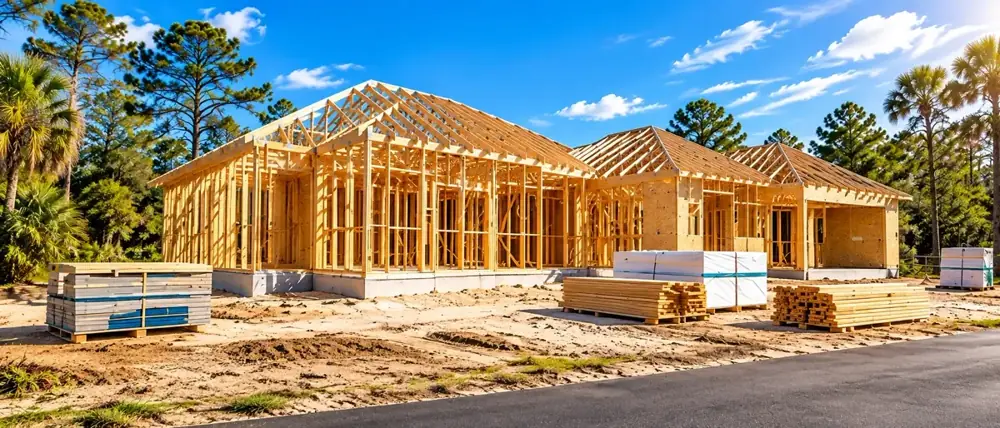
Financing that combines the purchase of the lot and the cost to build the home into one coordinated construction package. Ideal when a borrower is buying land specifically to build, wants to move directly from lot acquisition into construction, or prefers one financing strategy instead of arranging separate land and construction loans.

If the borrower already owns the lot, the appraised land value or available land equity may be credited toward the required down payment or equity contribution. Depending on the program, this can reduce cash out of pocket and may even satisfy a meaningful portion of the required equity.

During construction, funds are usually released in scheduled draws as work is completed and inspected. Borrowers may make interest-only payments during the build based on the amount actually disbursed, then transition to a permanent mortgage or long-term repayment structure once the home is complete, depending on whether the program is a one-time-close or two-time-close structure.

Common documentation may include the lot purchase contract or deed, land payoff information if applicable, construction contract, builder credentials, plans and specifications, detailed budget, draw schedule, permits or permit path, survey, appraisal based on the completed value, title work, insurance requirements, and verification of borrower income, assets, credit, and reserves.

Best fit: Borrowers with a defined build plan, qualified builder, strong credit, stable income or verified liquidity, sufficient reserves, and a realistic budget that supports the finished home value — especially buyers who want to secure the land and construction financing at the same time, or lot owners who want to leverage existing land equity to begin building.

Compared with taking out a separate land loan first and construction loan later, a Lot + Construction Combo Loan can simplify the financing path, reduce duplicate closing steps, and align the lot purchase with the build timeline.

05.

Agricultural & Rural Land Loan

Larger Parcels

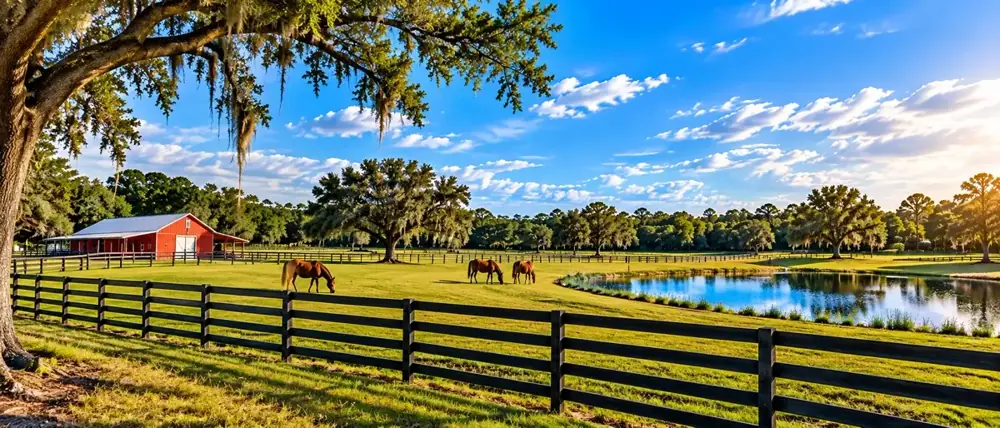
Financing for farmland, ranch acreage, timber tracts, equestrian property, hobby farms, and larger rural parcels that fall outside typical residential lot guidelines. Structured for properties where acreage, zoning, access, productive use, and long-term land value matter as much as the borrower's personal credit and financial profile.

Because these properties may involve farming, grazing, recreational use, timber, conservation, or mixed residential-agricultural purposes, lenders typically review the intended use, zoning classification, access, water availability, soil or land characteristics, and whether the property can reasonably support the borrower's plan. Larger parcels may also require a specialized appraisal and a lender familiar with rural collateral.

Common review items may include a land or agricultural appraisal, survey, legal description, title work, zoning confirmation, road or easement access, flood-zone review, environmental considerations, water rights or well information when applicable, soil or agricultural-use details, tax classifications, leases, conservation restrictions, and documentation of any existing farm, ranch, or recreational income.

Best fit: Borrowers with strong credit, stable income or verified liquidity, sufficient equity contribution, adequate reserves, and a clear plan for the land — whether operating a farm, expanding acreage, holding rural property for long-term appreciation, building a country home, running livestock, or using the parcel for recreation or conservation.

Compared with standard residential lot financing, Agricultural & Rural Land Loans often require more specialized underwriting because the collateral is larger, more use-specific, and sometimes income-producing.

Land Refinance Programs

Refinance land you already own

Land Rate-and-Term Refinance

Refinance land you already own into a better rate or term. A smart move if you bought with owner financing or a short-term note.

Land Cash-Out Refinance

Pull equity out of land you own free-and-clear or with low leverage — funds you can use for improvements, a build, or other needs.

Owner-Financed Land Payoff

Replace a seller-held or private note with conventional financing before a balloon payment comes due — often at a lower rate and longer term.

Ready to price your land scenario?

Tell us the parcel location, size, and how developed it is — we'll match the right vacant-land program and quote your rate, down payment, and terms with a same-day answer.

Vacant Land Loan FAQ

Common questions about vacant land financing, requirements, and how to get started.

Direct Land Lender · Licensed in Florida & California · A+ BBB RatingSame-Day Land Loan Quotes

  • Raw & Unimproved Land
    Undeveloped acreage & partial-infrastructure parcels
  • Improved & Buildable Lots
    Shovel-ready lots with utilities in place
  • Lot + Construction Combo
    One coordinated loan for land and build
  • Agricultural & Rural
    Farms, ranches, timber & larger acreage
How Much You'll Put Down

Your Down Payment Depends on How Developed the Land Is

The more developed a parcel is, the less risk it carries — and the smaller your down payment. These are general guidelines; your exact terms depend on credit, location, and the property itself.

35%
Down
Raw Land

Fully undeveloped property with no roads, electricity, or water. The most challenging to finance, so it carries the highest down payment.

25%
Down
Unimproved Land

Land with partial infrastructure — a road, access, or a cleared lot — but no utilities connected. Moderate risk, moderate down payment.

15%
Down
Improved Land

Ready-to-build lots with utilities such as water, sewer, and electric already in place. The lowest risk, so the lowest down payment.

Disclaimer

Legal & Licensing Disclosure: All loans are subject to credit approval and property qualification. Down payment requirements, rates, terms, and program availability are subject to change without notice and vary by borrower profile, property type, and location. Figures shown are general guidelines and are not a commitment to lend. Equal Housing Lender. Licensed in Florida and California. © 2026 1st Florida Lending Corp. All rights reserved.